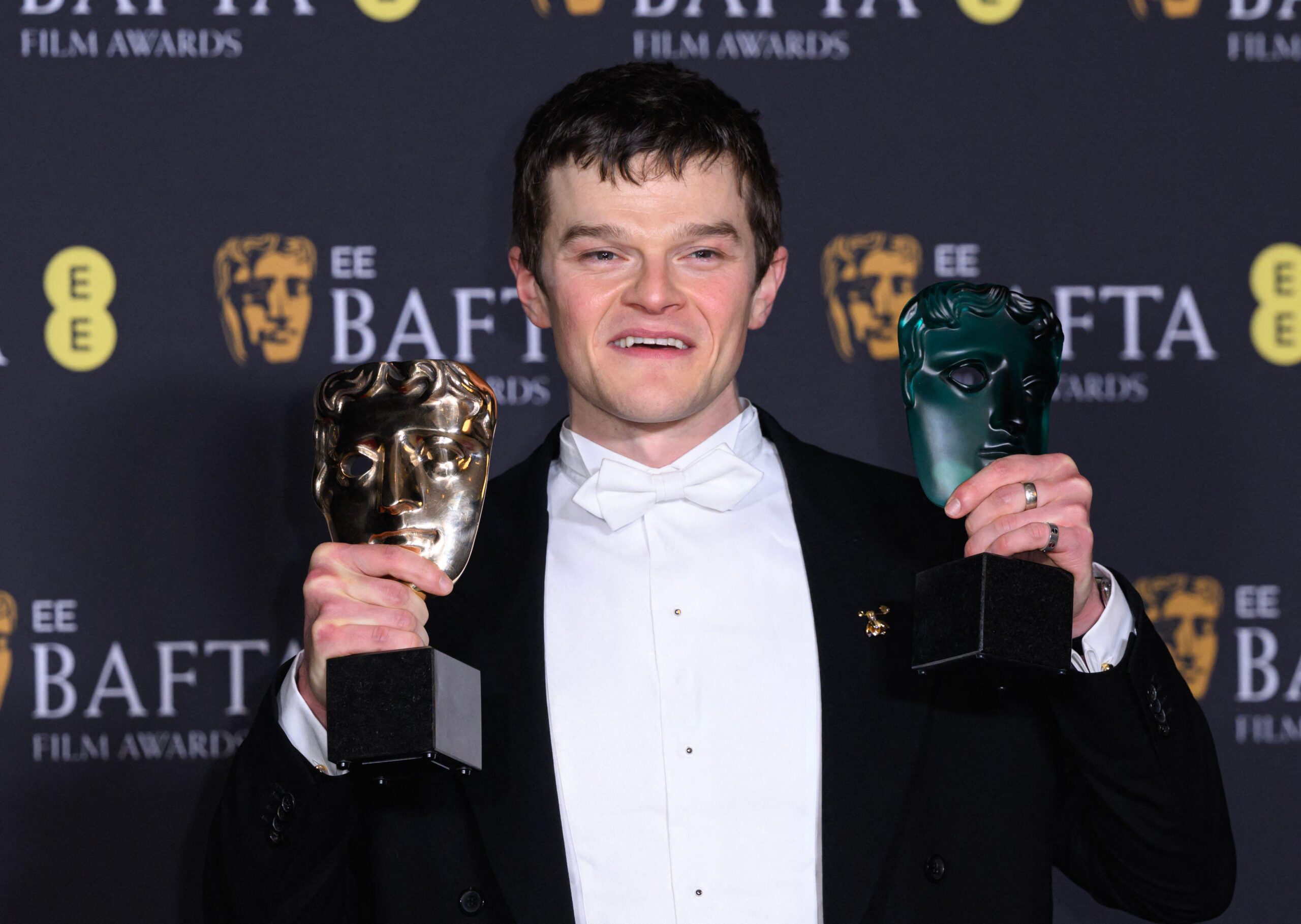
The 2026 BAFTA Craft Awards spotlighted a clear frontrunner: Adolescence, Netflix’s emotionally charged drama about teenage trauma and resilience, took home two prestigious awards—Outstanding Writing for a Drama Series and Best Original Music Score. The wins cement the show’s reputation not just as a cultural phenomenon, but as a masterclass in technical and narrative excellence.
Meanwhile, Celebrity Traitors, the high-stakes reality reboot from the BBC, claimed top honors in immersive sound design and multi-camera production, proving that reality formats can rival scripted series in craft precision. These wins reflect a broader shift in how television artistry is evaluated—no longer confined to genre hierarchies, but celebrated across formats.
This year’s ceremony, held at the historic Roundhouse in London, emphasized craftsmanship over celebrity. It was a night where composers, editors, and sound engineers took center stage—many of them first-time winners. But none shone brighter than the team behind Adolescence, whose meticulous approach to storytelling and sonic landscape redefined what a teen drama can achieve.
Why Adolescence Won: Narrative Depth Meets Technical Finesse
Adolescence didn’t win because it’s popular—it won because every frame, every silence, every musical cue feels intentional. The show’s writing team, led by rising star Mara Ellison, received the award for Best Writing in a Drama Series, a rare feat for a second-season entry.
Their script for the episode “The Quiet One” dissected the psychological aftermath of school violence without resorting to sensationalism. Instead, it used restraint—long pauses, fragmented dialogue, and non-linear flashbacks—to mirror the protagonist’s dissociation. Judges praised its “unflinching empathy” and “structural innovation.”
But the real surprise was the win for Best Original Music Score, awarded to composer Theo Renwick. His minimalist, piano-and-string-driven score avoided emotional manipulation. Instead, it created an ambient tension that lingered long after scenes ended.
“Music wasn’t an accompaniment—it was a character,” said Renwick in his acceptance speech. “We wanted to score the silence between words, not the words themselves.”
This dual victory signals BAFTA’s recognition of Adolescence not as a mere streaming hit, but as a show where every technical layer serves the story.
Behind the Scenes: The Craft of Adolescence
To understand why Adolescence swept the craft categories, you need to look beyond the screen. The production team adopted an almost obsessive attention to realism:
- Sound Design: Foley artists recorded actual school environments—lockers slamming, sneakers on linoleum, muffled hallway chatter—to ground the show’s tension in authenticity.
- Cinematography: The use of handheld cameras in therapy scenes created intimacy, while static wide shots during confrontation scenes emphasized emotional distance.
- Editing Rhythm: Editors used micro-pauses—sometimes as short as six frames—to simulate the hesitation of trauma survivors.
These choices weren’t accidental. Showrunner Lena Park implemented a “craft-first” workflow: music was composed before filming, and editors were involved in pre-production. This integration allowed music and visuals to evolve in tandem, not as post-production afterthoughts.
One practical example: in the episode “Bathroom Mirror,” the score begins 0.8 seconds before the character speaks—just enough to suggest an internal monologue. This subtle sync was achieved through weekly collaboration between the composer, director, and editor.
Celebrity Traitors: A Masterclass in Reality Production
While Adolescence dominated the drama categories, Celebrity Traitors proved that reality TV can be just as technically sophisticated. The show, a reboot of the early-2000s cult favorite, won two craft awards:
- Best Sound Design (Factual & Reality)
- Best Multi-Camera Editing (Entertainment)
Unlike traditional reality formats, Celebrity Traitors uses a 360-degree audio setup and 42 cameras, including hidden microphones in furniture and wearable body mics with adaptive noise filtering. This allowed sound engineers to isolate whispers during strategy meetings—critical in a show where betrayal is the core mechanic.
The editing team faced a monumental challenge: condensing 200 hours of footage per episode into 45 minutes of high-stakes narrative. Their solution? A “game logic” timeline that prioritized psychological beats over chronological order.
For instance, a confession filmed on Day 5 might appear before a betrayal from Day 3, if it heightened dramatic irony. This non-linear approach, borrowed from documentary storytelling, gave the show a cinematic edge.
“We weren’t just editing footage—we were constructing a thriller,” said lead editor Raj Mehta. “Every cut had to serve suspense.”
The BBC’s investment in live-switching technology also paid off. Directors could cut between feeds in real time during live episodes, creating a seamless, immersive experience.
The Rise of Craft-Centric Television
The 2026 BAFTA Craft Awards reflect a larger industry shift: audiences and award bodies alike are rewarding technical mastery. In the past, awards often favored big names or network prestige. Today, they go to shows that innovate in execution.
Adolescence and Celebrity Traitors represent opposite ends of the spectrum—one a serious drama, the other a reality game show—but both succeeded by treating craft as central, not supplemental.
This trend has practical implications for creators: - Budget allocation should prioritize sound and editing early, not as post-production line items. - Cross-department collaboration (e.g., involving composers in pre-production) can elevate storytelling. - Format doesn’t dictate quality—even reality TV can achieve artistic depth with the right technical foundation.
A common mistake? Outsourcing craft roles to save costs. One indie drama series, After Light, lost critical momentum because its music and sound were handled by a single freelancer. In contrast, Adolescence had a dedicated 18-person post-production team. The difference was palpable—and rewarded.
What These Wins Mean for Streaming and Broadcast
Netflix’s dominance isn’t just about viewership—it’s about investment in craft. Adolescence had a per-episode budget of £2.3 million, with 38% allocated to post-production. This contrasts sharply with industry averages, where post-production often gets less than 20%.

Meanwhile, the BBC’s win with Celebrity Traitors proves that public broadcasters can compete by reinventing legacy formats with modern techniques. Their use of AI-assisted log review tools cut editing time by 40%, freeing up resources for creative experimentation.
For platforms, the message is clear: - Invest in post-production talent—not just A-list actors or directors. - Reward technical innovation—like Adolescence’s music-first approach or Celebrity Traitors’ live-switching. - Break genre hierarchies—craft excellence isn’t limited to prestige drama.
The Future of Craft in Television
The 2026 winners set a precedent: storytelling is no longer just about plot or performance. It’s about how sound, music, editing, and design shape the viewer’s emotional journey.
Upcoming projects are already adapting. Echo Chamber, an Apple TV+ political thriller, has hired Adolescence’s sound designer. Amazon’s Kingdom Divided is using AI-driven temp scores to guide early edits—inspired by Theo Renwick’s pre-filming process.
But there are limitations. Not all productions can afford Adolescence’s budget. The key is scalability: smaller teams can adopt similar workflows by focusing on core craft principles—intentionality, integration, and collaboration—without requiring massive resources.
For independent creators, the takeaway is simple: start small, but think holistically. A well-composed ambient track or a precisely timed edit can have outsized impact, even on a microbudget.
Final Thoughts: Craft as Storytelling
The 2026 BAFTA Craft Awards didn’t just honor two shows—they validated a philosophy. Great television isn’t made in boardrooms or by algorithmic audience targeting. It’s built in editing bays, scoring studios, and sound labs by professionals who understand that every technical choice shapes the story.
Adolescence and Celebrity Traitors won not because they were popular, but because they were precise. Their victories are a call to elevate craft from support role to creative driver.
For creators, the path forward is clear: - Involve craft leads early - Prioritize integration over hierarchy - Treat every technical element as narrative
The future of television belongs not to the loudest shows, but to the most thoughtfully made.
FAQ
Did Adolescence win any acting awards at the 2026 BAFTAs? No—its wins were in craft categories only. The acting awards were claimed by performers from The Crown and Slow Horses.
What was the most unexpected win at the 2026 BAFTA Craft Awards? Many expected The Last Archive to win Best Sound Design, but Celebrity Traitors took it—an unusual win for a reality format.
How many nominations did Adolescence receive? It was nominated in five craft categories and won two: Writing and Original Music Score.
Is Celebrity Traitors available outside the UK? Yes—season two is streaming globally on BBC Select and BritBox.
Who composed the music for Adolescence? Theo Renwick, a former cellist with the London Contemporary Orchestra, created the score.
Were any new categories introduced in 2026? Yes—Best Immersive Audio Experience was added, won by the VR companion piece to Adolescence.
How can indie creators compete with high-budget shows in craft excellence? Focus on intentionality. A single, well-designed sound motif or a tightly edited sequence can resonate more than expensive effects.
FAQ
What should you look for in BAFTA Craft Awards Winners: Adolescence Dominates with Two Major Wins? Focus on relevance, practical value, and how well the solution matches real user intent.
Is BAFTA Craft Awards Winners: Adolescence Dominates with Two Major Wins suitable for beginners? That depends on the workflow, but a clear step-by-step approach usually makes it easier to start.
How do you compare options around BAFTA Craft Awards Winners: Adolescence Dominates with Two Major Wins? Compare features, trust signals, limitations, pricing, and ease of implementation.
What mistakes should you avoid? Avoid generic choices, weak validation, and decisions based only on marketing claims.
What is the next best step? Shortlist the most relevant options, validate them quickly, and refine from real-world results.